Black Friday: how to tell if a tech discount is real
A big ‘was’ price, a ticking timer and an ‘up to’ banner don’t prove a bargain. Here’s what the ACCC says a genuine discount looks like, and the checks to run before you pay.
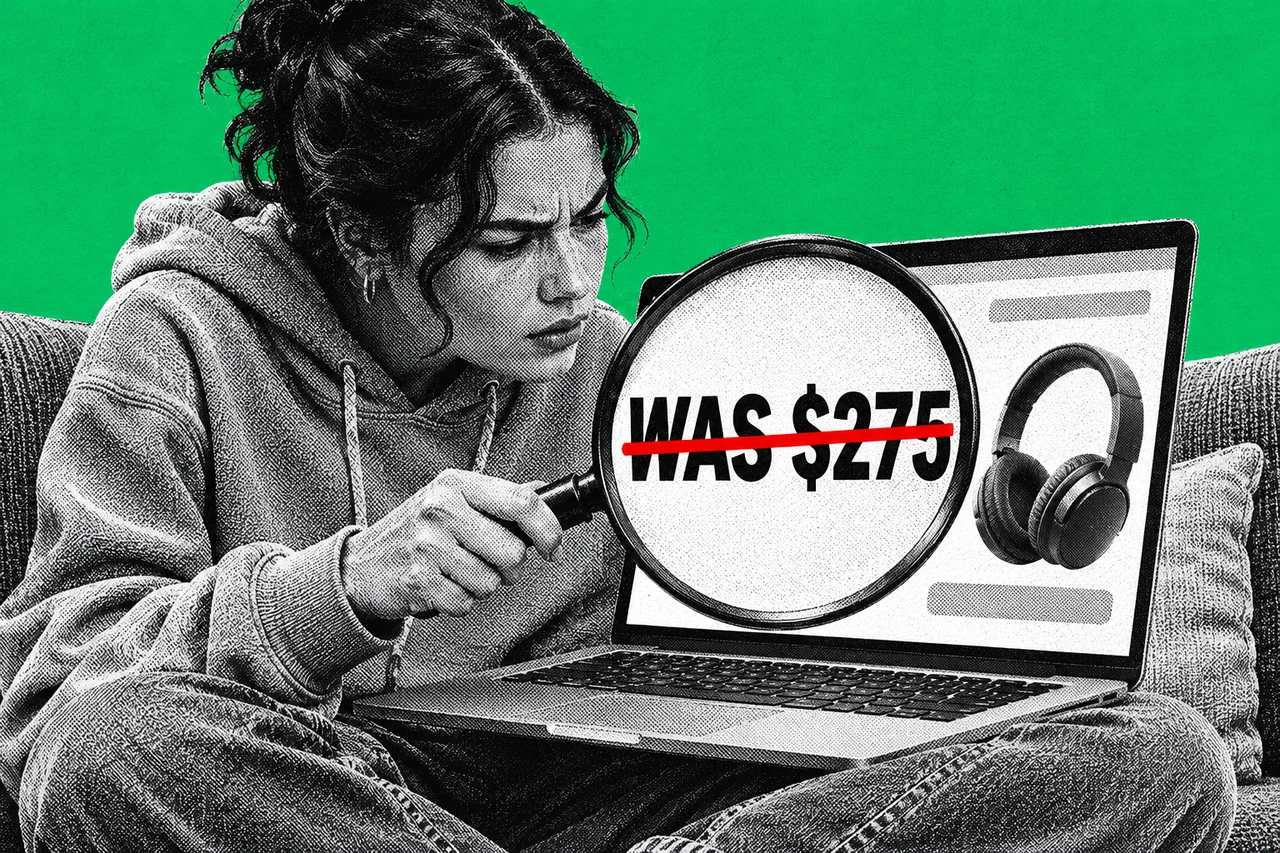
Picture it (our example): headphones marked “WAS $275, NOW $149”, a timer saying the deal ends in 2 hours, and a banner promising up to 70% off.
None of that proves you’re getting a bargain. The ACCC, Australia’s consumer watchdog, has a clear test for when those claims mislead, and it has fined retailers over claims it alleged were misleading. One admitted it. Here’s what a real discount looks like, and how to check one before Black Friday.
The ‘was’ price has to be real
A strikethrough or “was” price tells you how much you’re saving. The ACCC uses that exact example: “WAS $275 NOW $149” implies the buyer will save the difference.
That only holds if the shop actually charged $275. The ACCC says a “was” price can mislead if the item wasn’t sold at that price “for a reasonable period right before the sale started”. It can also mislead if only a very small proportion of items sold at the higher price.
There’s no fixed number of weeks in the guidance. But a “sale” price offered for an extended period may mislead too, because the price “has effectively become the new selling price”.
This has caught tech retailers. In September, camera and electronics store digiDirect paid $99,000 in penalties and admitted its strikethrough discounts misled shoppers. One keyboard was shown at $149 with a $229 strikethrough price, and the ACCC called the saving “illusory”. We covered the case, and the test, in our story on strikethrough prices.
RRP isn’t a promise either
A tag reading “RRP $399, our price $279” (our made-up example) works the same way. An RRP comparison can mislead if the product was never sold at that price. It can also mislead if it wasn’t sold at it for a reasonable period right before the sale.
An RRP tells you what a supplier suggested, not what anyone actually paid. Treat it as a starting point for your own comparison.
Read the ‘up to’ fine print
Ahead of last year’s Black Friday, the ACCC said it was targeting “up to X% off” claims where the “up to” text was not prominently displayed. It also targeted claims where few or very few products were actually at that discount.
“Sitewide” and “storewide” claims get the same scrutiny. A “X% off all products” claim with exclusions buried in fine print may also be misleading, according to the regulator.
In June 2025, Michael Hill, MyHouse and Hairhouse Online each paid a $19,800 infringement notice over allegedly misleading “sitewide” Black Friday claims. The ACCC alleged Hairhouse had excluded more than a quarter of its products.
The timer that resets
Countdown timers are there to rush you. The ACCC’s sweep also targeted “countdown timers that don’t align with the true duration of the sale”.
When it checked 50 retailers in last year’s Black Friday sweep, the ACCC said around half made concerning claims. In September, James Lane and Vuly paid infringement notices. The ACCC alleged one ran a sale past its advertised end date and the other reset its countdown timers. We covered it in our story on countdown timers.
If a timer hits zero and the deal is still there tomorrow, it was never the deadline it claimed to be.
The price you pay at the end
Black Friday prices can still grow at the checkout. The ACCC calls this drip pricing: extra fees “gradually added during the purchase process”.
Businesses must tell you at the start which fees will apply and when. A price must show the minimum total cost: the lowest amount you could pay, including taxes and unavoidable or pre-selected extra fees. Compare that total across stores, not the headline figure.
Sale items still come with your rights
A sale doesn’t strip your consumer guarantees. If a sale laptop turns out faulty, you may still be entitled to a repair, replacement or refund under Australian Consumer Law.
The ACCC says it’s illegal for businesses to rely on policies such as “no refunds or exchanges on sale items”. You don’t get a remedy for finding it cheaper elsewhere. Changing your mind isn’t covered either, unless the store has its own change-of-mind policy. If it does, it must follow it.
Make sure the shop is real
The other Black Friday risk isn’t a dodgy discount. It’s a store that doesn’t exist.
Buying and selling scams made up 58.7% of Scamwatch reports involving a financial loss from January to September 2026. Shoppers lost $17.2 million. Scamwatch says to treat large discounts, countdown timers and pressure to pay immediately “as reasons to pause”. It suggests checking a seller’s details with ABN Lookup, and its domain with ICANN Lookup or auDA for .com.au addresses. We covered the latest figures in our story on shopping scams.
Do your homework this week
The ACCC’s own advice is the best one: check prices now, before the sales start. If you know what the laptop or TV costs in an ordinary week, a fake “was” price can’t fool you.
Checklist
- Write down today’s prices. Note the current price of anything you plan to buy on Black Friday, at two or three stores.
- Ignore the ‘was’ and RRP figures. Compare the Black Friday price with the prices you wrote down, not the strikethrough number.
- Read the ‘up to’ small print. Check how many products are really at the top discount before you shop a “sitewide” sale.
- Don’t let a timer rush you. If the price is right, it will still be right after a quick comparison with other stores.
- Compare the checkout total. Add delivery and any unavoidable fees before you decide which store is cheapest.
- Keep your receipt for sale items. Faulty goods bought on sale may still qualify for a repair, replacement or refund.
- Check an unfamiliar store before paying. Look up its ABN on ABN Lookup and, for a .com.au site, its domain on auDA.
Tick items as you go. Your ticks stay in this browser.