Sale end dates and countdown timers: the ACCC's Black Friday warning after two retailers pay $59,400
James Lane and Vuly paid $59,400 over sales the ACCC alleges ran past their advertised end. What it expects from sale deadlines before Black Friday.
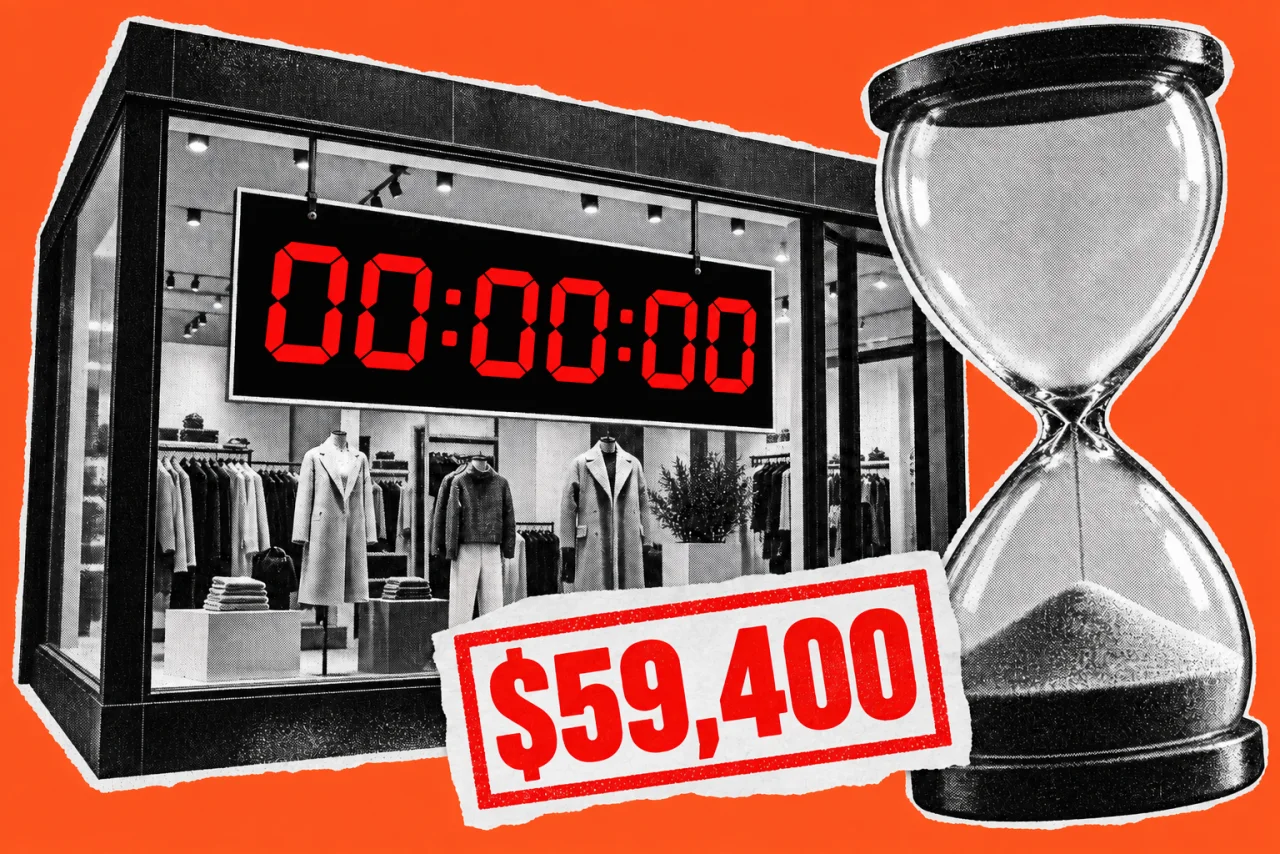
Two online retailers have paid penalties because their sales didn’t end when they said they would. The ACCC announced on 29 September 2026 that furniture retailer James Lane paid $19,800 and children’s play equipment retailer Vuly paid $39,600, after infringement notices over how long their Black Friday sales would last.
The case isn’t about the price. It’s about the deadline. Any business that writes “sale ends Sunday”, “3 days only” or puts a countdown timer on its website is making a claim the ACCC can test, and it has told retailers it will keep actively monitoring discount claims. On our reading of the calendar, Black Friday falls on 27 November 2026.
What the ACCC alleges
James Lane (The Sleeping Giant Pty Ltd, trading as James Lane) advertised that its Black Friday sale would end on 3 December 2025. According to the ACCC, the products continued to be advertised and sold at the discounted price for another week. The ACCC’s investigation found James Lane “had decided in advance of its Black Friday sale that the discount would be extended beyond the advertised end date”. It paid one infringement notice.
“We allege that James Lane created a false sense of urgency for consumers by using an early end date for its sale and statements such as ‘Sale ends today!’ despite the retailer deciding in advance that its sale would be extended,” ACCC Deputy Chair Catriona Lowe said.
Vuly (Systems Operations Pty Ltd, trading as Vuly Play Group) used countdown timers, according to the ACCC. In early November 2025 its website advertised products, including a trampoline, at “up to 30% off” in its Click Frenzy sale, next to a timer counting down to the sale’s end. The ACCC says that as soon as the timer ended, the discount rose to “up to 45% off” as part of a new sale, and the timer was set to a new end date. Later that month, its Black Friday sale ran “up to 45% off” with a timer ending on the official Black Friday date. When that ended, the discount continued and the timer reset again. Vuly paid two infringement notices.
Both retailers have committed to the ACCC that their future sales advertising will comply with the Australian Consumer Law. The ACCC’s register lists the alleged breach for both as section 29(1)(i) of the Australian Consumer Law, the provision on false or misleading representations about price. These are the ACCC’s allegations: no court has ruled on them.
Why a deadline matters
The ACCC’s concern is pressure. “We are concerned that retailers are increasingly using tactics that create a false sense of urgency, pressuring consumers to make rushed purchasing decisions for fear of missing out on a discount,” Ms Lowe said. “These claims also hurt competition as they can discourage consumers from shopping around.”
A deadline tells a customer the price will go up after it. If the business already plans to keep the discount going, or starts a “new” sale at the same or a better price the moment the timer hits zero, the ACCC’s position is that the urgency was false.
The ACCC’s own guidance on price claims makes the same point from the other side: promoting a limited offer isn’t a problem when the business is upfront and clear that it is “on sale for a limited time”. The claim just has to be true.
The ACCC is watching again
The ACCC says its sweep of Black Friday advertising in November 2025 identified both retailers’ claims. When it announced that sweep, it listed “3 days only” wording and countdown timers that don’t match the real sale length among the tactics it would check, alongside sitewide sale claims with exclusions, fine print that undercuts the headline, “up to X% off” claims and “was/now” prices.
Earlier sweeps have led to penalties for other retailers. In June 2025 Michael Hill, MyHouse and Hairhouse Online each paid $19,800 over “sitewide” and “storewide” sale claims. Last week camera retailer digiDirect paid $99,000 over strikethrough prices; we covered that case and the rules for “was” prices in Strikethrough prices: digiDirect’s $99,000 penalty.
“With this year’s Black Friday sales just around the corner, all retailers should be reviewing their sales advertising practices to ensure that any sales or discount claims they make are accurate, clear and not likely to mislead or deceive consumers,” Ms Lowe said. “Businesses must ensure any sale end dates, countdown timers or limited-time discount claims are genuine.”
What’s at stake for a small retailer
Infringement notices let the ACCC impose a penalty without going to court. The penalty amount per notice is set by law. Vuly’s $39,600 for two notices works out, on our reading, to $19,800 each, the same as James Lane’s single notice. That was the amount for conduct at the time. The ACCC’s fines and penalties page now lists $21,840 per notice for a company, from 1 July 2026, and much higher maximums a court can order.
For a small online store, the risk sits in ordinary decisions rather than elaborate schemes. On our reading, the two situations in this case are easy to fall into: extending a sale that’s going well after already advertising it as ending, and a countdown timer that resets to a new end date while the discount carries on. Dated screenshots of each sale, showing the advertised end and when prices actually went back up, give a business its own record of what customers were told.
Checklist
- Find every sale deadline you advertise. Check your website, sale banners, emails, social posts and ads for end dates, “ends tonight” wording and countdown timers.
- Check how each countdown timer is set up. Turn off timers that roll over to a new end date automatically when they reach zero.
- Set the real end date before the sale starts. If you already plan to run the discount longer, advertise the longer date from day one.
- End the discount when the timer or date runs out. Don’t follow a finished sale straight away with a “new” sale at the same or a bigger discount.
- Brief whoever runs your promotions. Tell staff or your agency that the ACCC is checking sale end dates and countdown timers during this year’s Black Friday sales.
- Keep dated screenshots of each sale. Record the advertised end date and when prices actually went back up, so you can show the deadline was genuine.
Tick items as you go. Your ticks stay in this browser.