Workplace monitoring has outrun the law, UTS report says
A UTS Human Technology Institute report says AI-powered monitoring of workers has outpaced Australian law. It wants a ‘fair and reasonable’ test in the Fair Work Act.
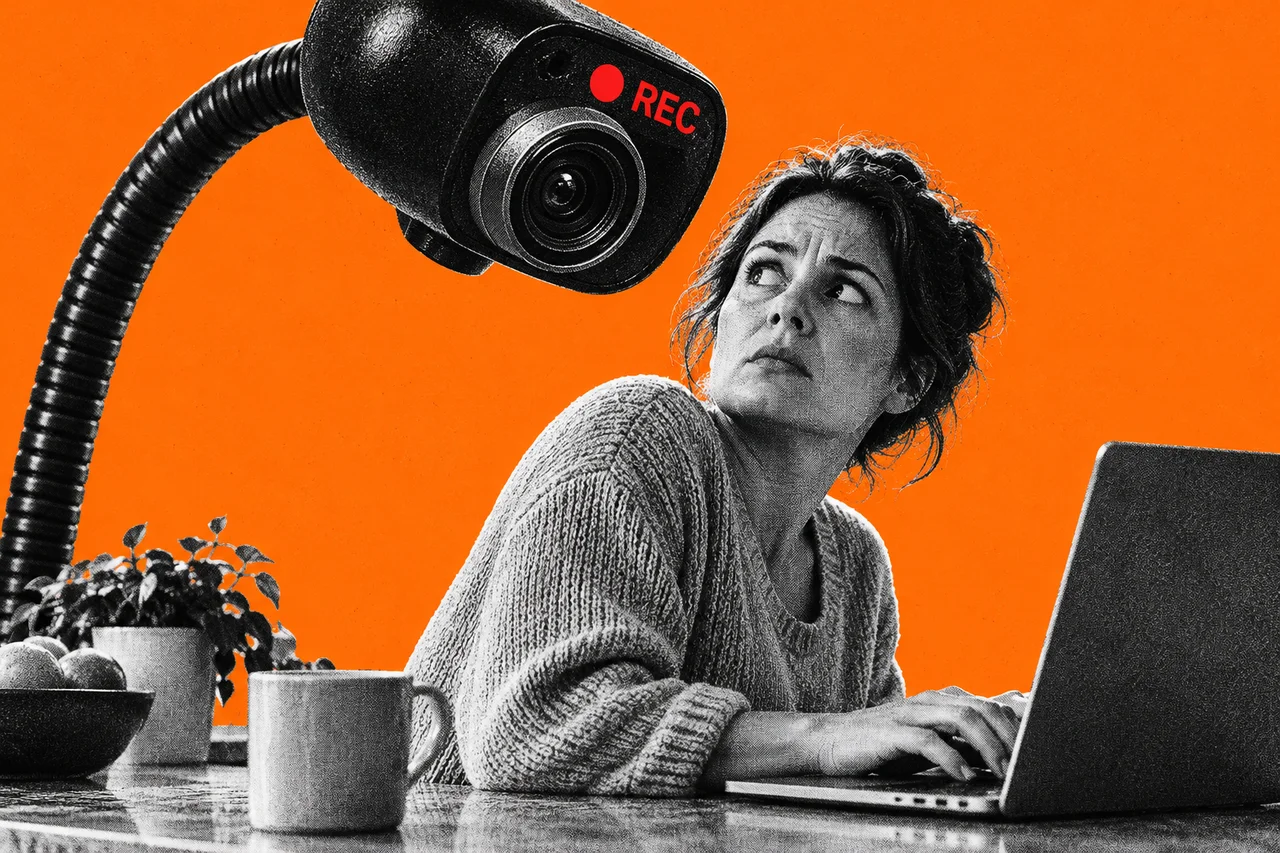
The software on your work laptop may be logging your keystrokes, grabbing your screen or tracking where you are. A new report says Australian law hasn’t kept up.
The University of Technology Sydney’s Human Technology Institute (HTI) released Drawing the line: Tech-enabled surveillance of Australian workers on 20 October. It calls for federal reform, starting with a new test in the Fair Work Act.
HTI co-director Edward Santow said in the UTS announcement that workers face more invasive forms of surveillance. “Yet our laws are dangerously out of date,” he said.
From sign-in sheets to emotion AI
The report lists a long menu of monitoring tools now on the market. They include keystroke logging, screen capture, email and chat monitoring, GPS, desk sensors and wearables. Then there are AI webcams, fingerprint and facial scans, and emotion recognition that tries to read your mood.
Employers already use plenty of it. The report cites a 2021 employer survey in which 91 per cent of Australian employers monitored remote workers’ locations through software.
Awareness is low. A March 2026 poll of more than 2,000 Australians, commissioned by the Minderoo Foundation, found 43 per cent knew some employers use technology, including AI, to monitor staff. Only 9 per cent knew monitoring was used in their own workplace.
Why the law has gaps
There’s no single national rule. The Fair Work Act doesn’t directly regulate surveillance. The Privacy Act’s employee records exemption means it doesn’t cover how an employer handles employment-related personal information. State laws on listening and tracking devices vary and focus on the device, not how it’s used.
Only NSW and the ACT have dedicated workplace surveillance laws, and the report says both are overdue for reform. Under the ACT’s Workplace Privacy Act, an employer must generally give written notice at least 14 days before surveillance starts, and consult workers in good faith. In NSW, Legal Aid NSW says an employer must give 14 days’ written notice before monitoring your email or internet use.
Victoria is moving too. In July, the Premier promised Labor laws requiring employers to tell workers if they’re being monitored, with biometrics allowed only where there’s no less intrusive option. The government hasn’t yet published draft laws.
Consent is the weak point, says HTI’s Sarah Sacher. “Right now, employers typically rely on workers ‘consenting’ to being monitored when they sign their employment contract,” she said.
What the report wants
These are proposals. None is law. The report asks the federal government to:
- Add a ‘fair and reasonable’ test. Any monitoring of workers would have to meet it, with flexible factors to weigh up.
- Give workers somewhere to complain. A dedicated privacy complaints stream in the Fair Work Commission.
- Let bargaining build on it. Enterprise agreements and modern awards would include a surveillance consultation clause and could set industry-specific rules.
- Back practical guidance. Regulators such as the Fair Work Ombudsman would explain how to comply.
It also wants a minister to be able to ban high-risk products, naming smart glasses and emotion recognition as candidates. Its protections would cover contractors and gig workers, and work done at home.
Separate Privacy Act changes are also under way. Our Privacy Act explainer covers what applies now and what’s proposed.
A test employers can use today
The report’s test isn’t law yet, but employers can use it now. It starts with a specific, legitimate purpose. “Keeping an eye on” staff, or vague productivity goals, isn’t specific enough.
Then pick the least intrusive way to get there. A sign-in system beats location tracking for checking office attendance.
Two worked examples show the line. GPS in delivery vans, explained at induction, signposted on the dashboard and able to be switched off after hours when the van is also used privately, is “likely to be legitimate”. An AI tool that scores call-centre staff for “negative sentiment” and downgrades their KPIs is “likely to be illegitimate”.
Checklist
- List every monitoring tool you use. Include laptop software, vehicle GPS, cameras, and any AI features switched on in your phone, call or productivity systems.
- Write down why each one is there. Under the test the UTS report proposes, keeping an eye on staff isn’t a specific enough reason.
- Check for a less intrusive option. For office attendance, a sign-in system may do the job instead of location tracking.
- Give written notice in the ACT and NSW. The ACT generally requires it at least 14 days before surveillance starts, plus good-faith consultation. In NSW, give 14 days’ written notice before monitoring staff email or internet use.
- Keep each tool’s data to its purpose. Don’t use safety camera footage for performance reviews.
- Set a deletion date. Decide how long monitoring data is kept, and delete it on schedule.
- Let drivers switch off after hours. If a work vehicle with GPS is also used privately, give them a way to turn tracking off.
Tick items as you go. Your ticks stay in this browser.