What banks charge to take cards: the first published fee data
NAB, Westpac, ANZ Worldline and Square have published their average card fees. Small businesses pay more than the headline rate, and online sales cost more again.
You can now see roughly what businesses like yours pay to take cards. Until this week, that number was hidden in each business’s own statements.
The big card providers had to publish their average merchant service fees for July to September 2026 by 30 October. The Reserve Bank set the rule as part of its card payments review, the same package that ended card surcharges on 1 October. By Friday, NAB, Westpac, ANZ Worldline (ANZ’s merchant business) and Square had their figures up.
Here’s what they show, and what they don’t.
The headline: about half a per cent at the banks
The merchant service fee is what your payment provider charges you for each card payment, as a share of the sale. These are the averages across each provider’s “direct merchants”, the businesses it signs up itself.
| Provider | All direct merchants | Small merchants | Medium-sized merchants |
|---|---|---|---|
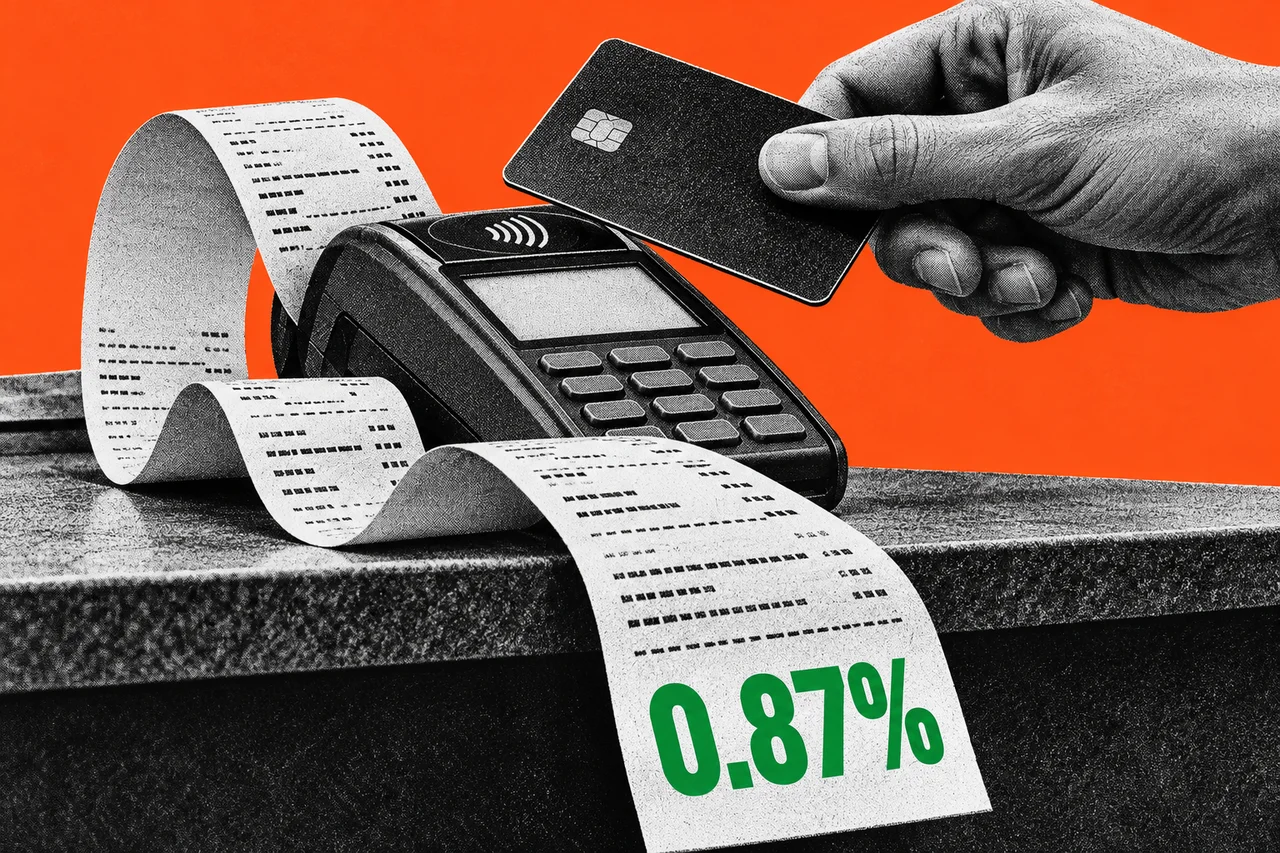
| NAB | 0.58% | 0.87% | 0.66% |
| Westpac | 0.55% | 0.79% | 0.65% |
| ANZ Worldline | 0.55% | 0.97% | 0.82% |
| Square | 1.34% | 1.47% | 1.17% |
The RBA’s rules define small merchants as businesses taking $1 million or less a year in eftpos, Mastercard and Visa payments with that provider. Medium-sized merchants take between $1 million and $10 million. There’s no separate figure for large businesses, but they’re in the “all” average. That helps explain why it sits below the small and medium rates at the banks.
Small businesses pay more
At every provider, small merchants paid more than the average across all merchants. At NAB the gap was 0.87% against 0.58%. At ANZ Worldline it was 0.97% against 0.55%.
Square’s averages are higher in every size band and for every domestic payment type. It says its figures cover sellers on standard and custom pricing. We compared Square’s published prices with Stripe’s in an earlier guide.
Online sales cost more than a tap
For small merchants, card payments taken online or keyed in cost more than cards tapped in store at all four providers.
| Small merchants | Debit in store | Credit in store | Debit online | Credit online |
|---|---|---|---|---|
| NAB | 0.76% | 0.96% | 1.03% | 1.19% |
| Westpac | 0.60% | 0.94% | 0.69% | 1.03% |
| ANZ Worldline | 0.81% | 1.16% | 0.86% | 1.25% |
| Square | 1.42% | 1.42% | 1.86% | 1.89% |
Debit cards were cheaper than credit cards at the three banks. At Square, debit and credit cost the same in store.
Cards issued overseas were the dearest of all at the banks, up to 2.15% for small merchants at Westpac.
What a gap looks like in dollars
As an illustration, take a small business putting $300,000 a year through cards. At the lowest small-merchant average among the banks, 0.79%, it would pay about $2,370 in fees. At the highest, 0.97%, it would pay about $2,910.
What eftpos itself reported
The networks had to publish too. Australian Payments Plus, which runs eftpos, reported 895.7 million domestic eftpos transactions worth $48.9 billion in the September quarter, with an average eftpos interchange fee of 2.8 cents a transaction. Interchange is a wholesale fee paid between the banks behind each payment. We couldn’t find Visa or Mastercard figures on their Australian websites on 30 October.
Read these numbers with care
- They’re averages, not your rate. NAB says the figures are “not your individual merchant service fee” or a complete picture of card costs. ANZ Worldline lists hardware, gateway fees, pricing plan and card mix among the things that shape what you pay.
- They’re before the October changes. Most interchange caps fell, and surcharging on eftpos, Mastercard and Visa ended, on 1 October. ANZ Worldline says its report won’t reflect pricing changes made for those cuts.
- GST is out. NAB and Square say their figures exclude GST. Westpac and ANZ Worldline don’t say.
- Not everyone has published. CommBank said it would publish on 30 October, but its report wasn’t up when we checked that day. We couldn’t load Tyro’s page.
- Only the big players report. The rule covers providers handling more than $10 billion a year in card payments for businesses directly.
What comes next
The next set of figures, covering October to December, is due by 30 January 2027. It will be the first to show fees after the October interchange cuts. Large providers must also publish then how much of those cuts they passed on to merchants.
For what you can and can’t charge customers now, see our explainer on card surcharges.
Checklist
- Work out your own rate. Divide last quarter’s total merchant fees, excluding GST, by the value of card payments you took, both from your provider’s statements.
- Compare it with your band. Check the small or medium-sized merchant average published by your own provider, not the “all merchants” figure.
- Split in-store and online. If you take a lot of online or keyed-in payments, compare those separately, because for small and medium merchants they cost more at every provider.
- Ask your provider about 1 October. Ask whether your rate has changed since the interchange caps fell on 1 October 2026.
- Look again in late January. Providers must publish October to December figures by 30 January 2027, including how much of the October cuts they passed on.
Tick items as you go. Your ticks stay in this browser.