Strikethrough prices: digiDirect's $99,000 penalty and the 'was' price test for online stores
digiDirect paid $99,000 over strikethrough prices it almost never sold at. What the ACCC expects from 'was' prices before the Black Friday sales.
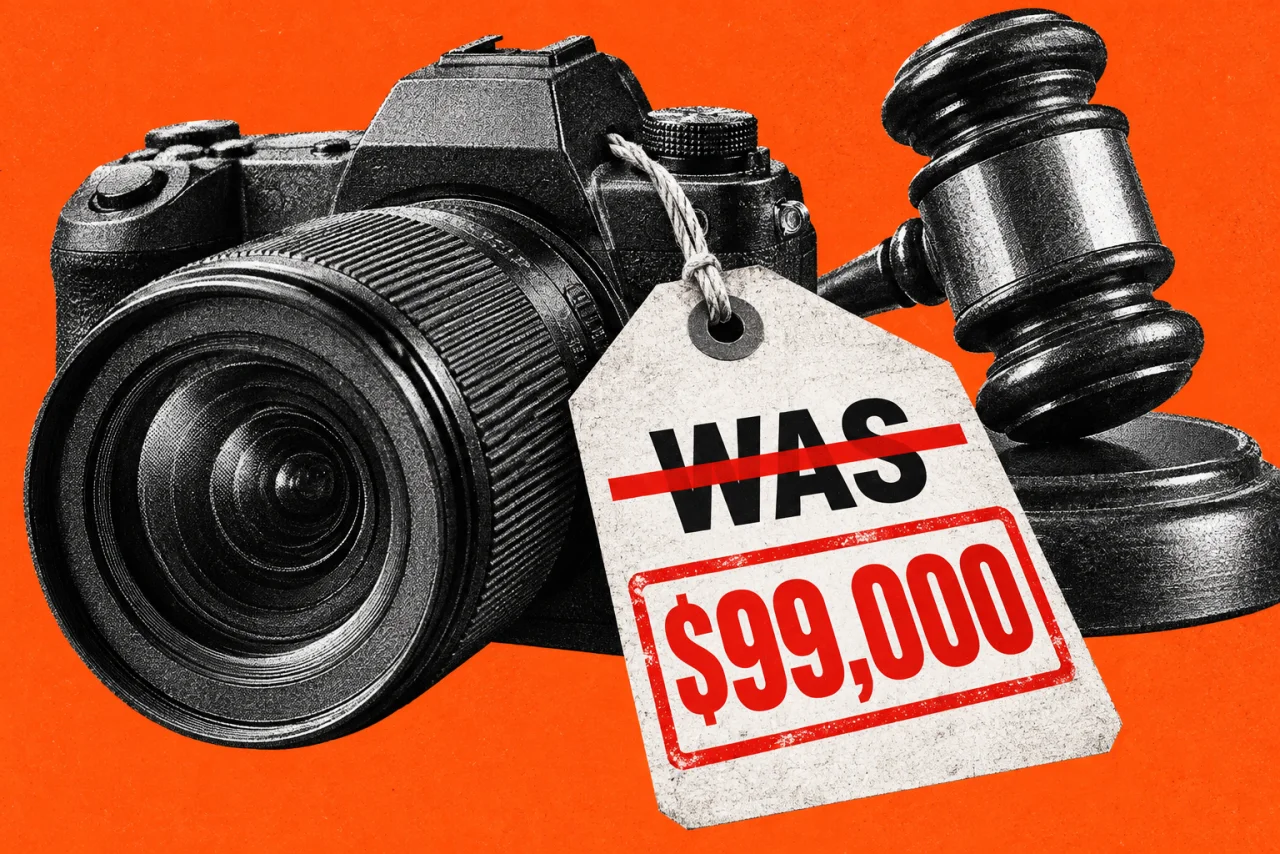
Camera and electronics retailer digiDirect has paid $99,000 in penalties and admitted that the strikethrough discounts on its website misled customers. The ACCC announced on 21 September 2026 that it had issued Digital Imaging Express Pty Ltd, trading as digiDirect, with five infringement notices “for making allegedly misleading discount claims”.
The case isn’t about a big supermarket. digiDirect runs an online store and seven physical stores, and the claims were ordinary price displays on product pages: a higher price crossed out beside a lower one. Any business that shows a “was” price online, in store or in an ad is working under the same rule. With the Black Friday and Boxing Day sales ahead, the ACCC has said it is watching.
What digiDirect did
According to the ACCC, digiDirect advertised electronic products on its website “as being discounted from a higher price that was struck through, and used the words ‘price slashed’, when in fact these products were rarely advertised and almost never sold at the higher price”.
One example was a mini wireless keyboard advertised for $149 with a strikethrough price of $229. The ACCC said other products included a camera, a camera and lens kit, and a Bluetooth remote control camera accessory.
The court-enforceable undertaking, accepted by the ACCC on 17 September, puts the conduct between at least 1 May 2024 and 8 November 2025. In it, digiDirect admits breaching sections 18 and 29(1)(i) of the Australian Consumer Law, which cover misleading conduct and false or misleading claims about price. For three years it must not make similar claims on its website, “Google Ads and/or other online advertising platforms”. It also has to post a corrective notice on its homepage for at least 60 days and run a compliance program with annual consumer law training and an independent review.
ACCC Deputy Chair Mick Keogh said the advertising “may have misled consumers into thinking they were getting a genuine discount when in reality the products were rarely advertised and almost never sold at the higher strikethrough price, and the suggested discount was illusory”.
The ACCC found the claims in a sweep of retailers’ Black Friday sales claims. In 2024 and 2025 it swept end-of-year sales, including Black Friday and Boxing Day, and it says it “is continuing to investigate several retailers about the claims they made”. Its April 2026 update listed misleading “was/now” or strikethrough pricing among the concerns.
The rule for ‘was’ prices
A strikethrough price tells a customer they’ll save the difference. The ACCC’s guidance on price claims says that with a claim like “WAS $275 NOW $149”, the advertised saving may be misleading if the product:
- “has never been sold at the higher price”, or
- “was sold in a limited amount at the higher price immediately before the sale”.
A “sale” price that isn’t actually temporary can also mislead. And the ACCC says: “A business must be able to prove any claim they advertise.”
The government’s business.gov.au guidance adds a time test. A comparison is a problem if the product “was not sold at the previous higher price for a ‘reasonable period’ before your sale”. It says: “What’s considered a ‘reasonable period’ will vary in each case. But if you can’t show sales at the previous higher price for a reasonable period, then it’s likely you’re misleading your customers.”
There’s no fixed number of weeks in that guidance. On our reading, the safest position is a record showing the product was genuinely offered at the “was” price, recently and for a meaningful stretch, before the discount started. The digiDirect undertaking uses similar words: a higher price the business had sold or offered the product at “for a reasonable period prior and at a time proximate to making that offer”.
Where small online stores get caught
On our reading, the risk is highest in a few common setups:
- Platform “compare at” fields. Online store platforms let you enter a higher comparison price that shows crossed out. If that figure is a supplier’s recommended price you’ve never charged, it can create the same impression digiDirect’s did.
- Permanent sales. A “sale” badge that never comes off, or a discount that’s always on.
- Ads and shopping feeds. The undertaking covers Google Ads and other online advertising as well as the website. A comparison price in an ad needs the same evidence.
What’s at stake
digiDirect’s penalty came through infringement notices, which the ACCC can issue without going to court. The ACCC’s fines and penalties page currently lists $21,840 per notice for a company that isn’t listed on a stock exchange; earlier conduct attracts the amount in force at the time. In court, the maximum penalty for a company for conduct from 28 March 2026 is the greatest of $100 million, three times the benefit gained or, if that can’t be worked out, 30% of adjusted turnover during the breach period.
Other online retailers have been caught too. In June, the ACCC announced that an ugg boot retailer paid $39,600 on two infringement notices over strikethrough pricing on its websites. Commissioner Luke Woodward said the consumer law “applies just as much to online stores as it does to bricks and mortar stores”. The ACCC noted that paying an infringement notice isn’t an admission of a breach.
Misleading pricing in the retail and supermarket sectors is on the ACCC’s 2026–27 enforcement priorities. Keogh warned that “all businesses should be on alert that the ACCC is actively monitoring for misleading pricing claims”.
If you’re reworking prices after the card surcharge ban on 1 October, the same rule applies: don’t advertise a saving against a price you haven’t genuinely charged.
Checklist
- List every product showing a crossed-out price. Check your online store, shopping feeds and ads.
- Pull the sales history for each one. Confirm the product was genuinely offered at the “was” price for a reasonable period just before the discount started.
- Remove comparison prices you can’t back up. That includes supplier recommended prices you have never charged.
- End sales that never end. Take down “sale” badges and discounts that have been running continuously.
- Keep a price record. Save dated price histories or screenshots so you can prove any “was” price if the ACCC asks.
- Brief whoever writes your ads. Tell your agency or staff that comparison prices in Google Ads and other ads need the same evidence as the website.
- Check Black Friday and Boxing Day plans now. The ACCC swept those sales in 2024 and 2025 and found the digiDirect claims that way.
Tick items as you go. Your ticks stay in this browser.