
Now, next, later: a one-page plan for a busy business
When every digital project feels urgent, a now, next, later plan sets the order without pretending to predict the year ahead. A one-page method and worksheet.
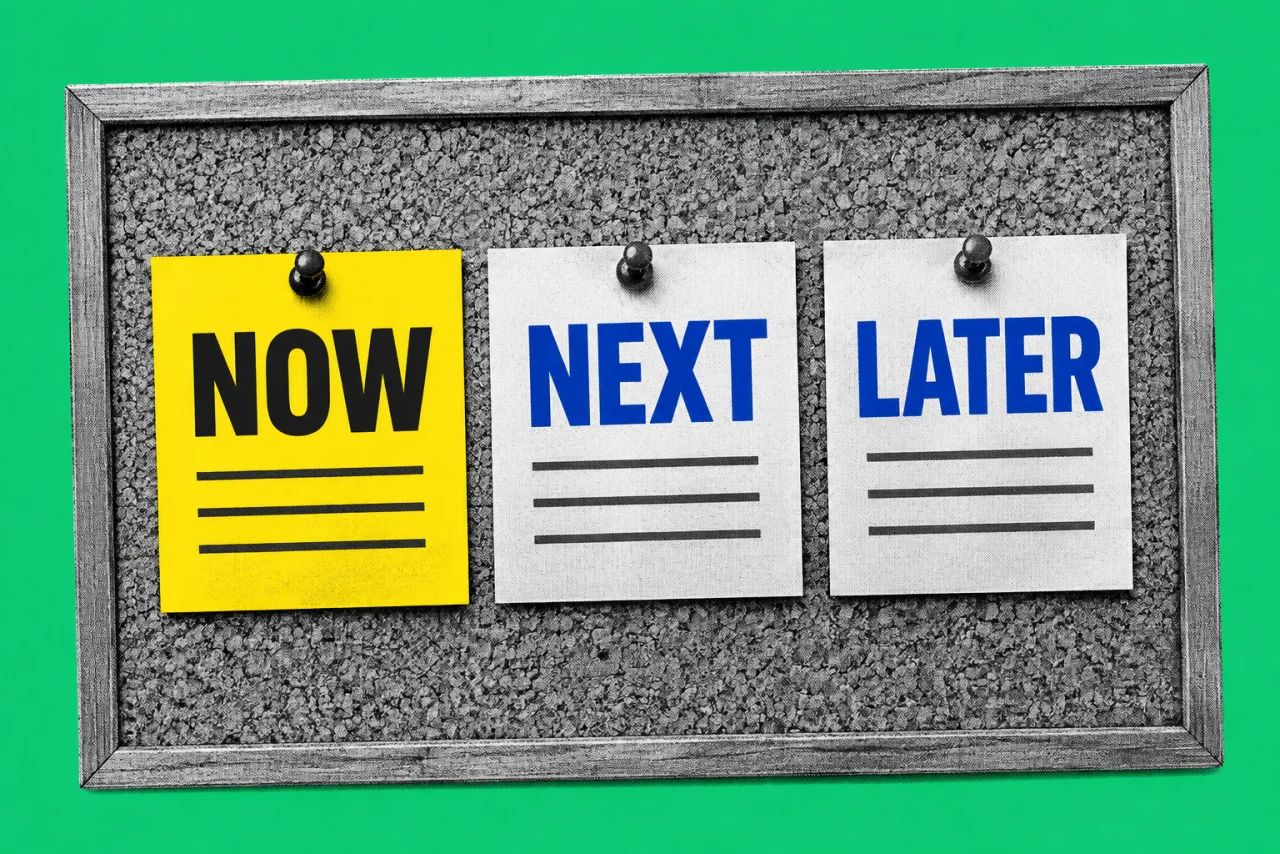
A long list of digital projects makes every task feel urgent. A now, next, later plan sets an order without pretending anyone can predict the next year in detail. It fits on one page.
Start with the problem, not the purchase
Write one sentence describing the problem you want to solve. “We need a new CRM” is a proposed solution. “We can’t see who is replying to new enquiries” is a problem you can investigate.
List the evidence you already have and the assumptions you still need to check. It’s fine for the first action to be a short investigation.
Now: one clear priority
Choose the smallest piece of work that addresses the most important current constraint. Define what “done” means, who owns it and what it depends on. For example: “All new website enquiries reach one monitored inbox, with a named backup and a tested confirmation message.”
Keep this section small enough that the team can explain it without opening a project board. Essential maintenance still needs an owner; the plan is not a reason to ignore it.
Next: work that follows logically
Put items here when they depend on the current priority or have a clear reason to happen soon. Record that reason. If the current work changes your understanding, change the next item. That is not failure.
Later: keep the idea, remove the pressure
Use this section for worthwhile ideas without a current case for action. Where you can, add a trigger: a capacity limit, a repeated customer question or a confirmed service change. “Later” should not become a list nobody reviews.
Test the do-nothing option
For each proposed purchase or rebuild, ask what happens if you leave things as they are for now. Sometimes the answer exposes a real cost or risk. Sometimes it shows the project is optional and attention is better spent elsewhere.
Download the decision worksheet and complete it for one question. Review it when the evidence or the business changes. For a practical first “now” item, read Where good enquiries get lost, and how to stop it.