AI is barely touching hiring yet, but more bosses expect it to bite
Most businesses say AI hasn’t changed how many people they’re hiring. The ABS’s first figures show which industries expect it to cut vacancies in the next 12 months.
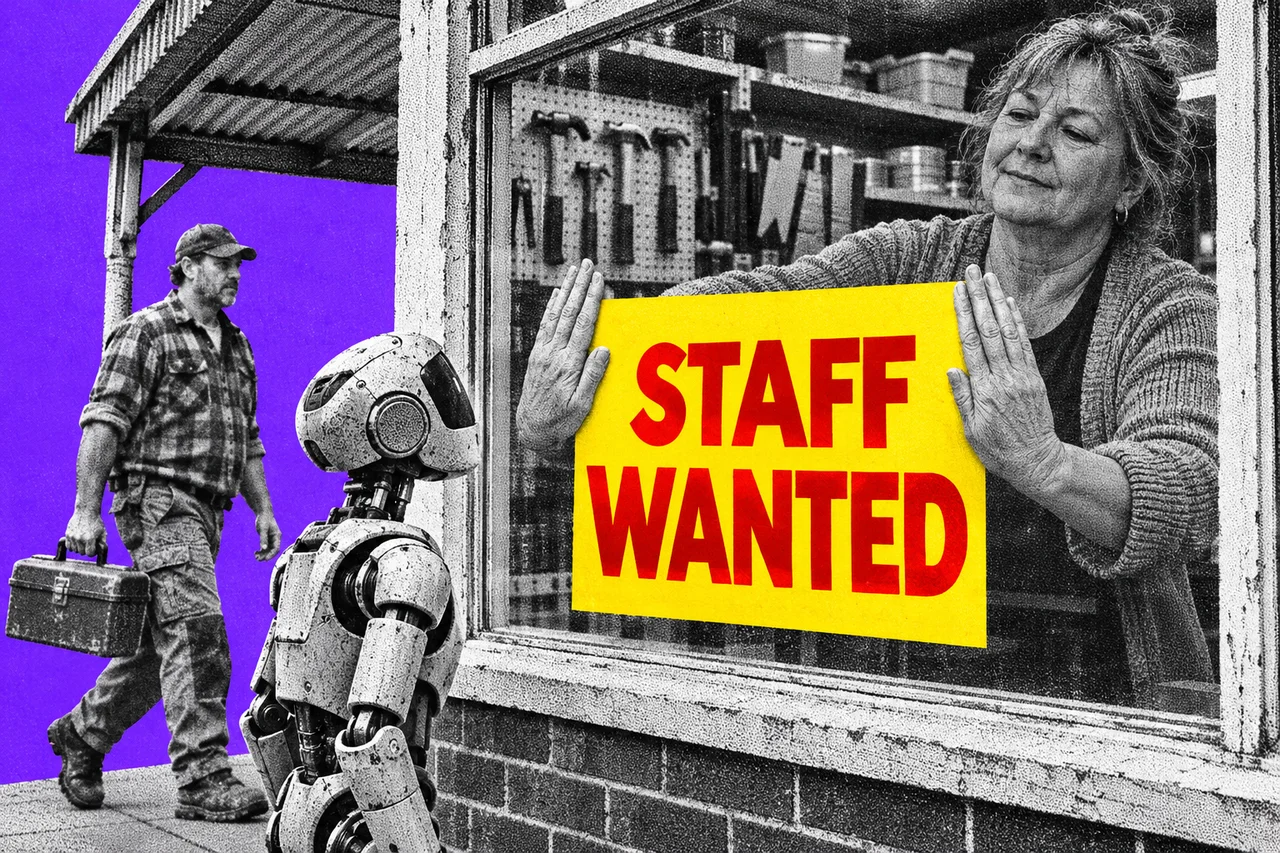
If you’re worried a chatbot is about to take the job you’re applying for, here’s some reassurance, for now. Most Australian businesses say AI hasn’t changed how many people they’re trying to hire.
That’s from the Australian Bureau of Statistics, which added questions about AI to its quarterly Job Vacancies Survey for the first time. The first results, released on Wednesday, cover August 2026.
Four in five businesses say AI hasn’t changed their hiring
In August, 81.8% of businesses said AI had no impact on their number of job vacancies. Another 13.0% weren’t sure.
Only 3.8% said AI had reduced their vacancies. Even fewer, 0.6%, said it had increased their vacancies.
“About 82 per cent of businesses reported that AI did not impact the level of job vacancies in August 2026,” said Sean Crick, the ABS’s head of labour statistics.
Media and telecommunications already feel it
The average hides big differences between industries. Information media and telecommunications had the highest share of businesses reporting fewer vacancies because of AI, at 16.2%.
Next came wholesale trade (8.1%), manufacturing (6.1%), retail trade (5.8%) and professional, scientific and technical services (5.2%).
A few industries report more vacancies because of AI. In electricity, gas, water and waste services, 9.9% of businesses said AI had increased their vacancies. Public administration and safety (3.9%) and health care and social assistance (2.0%) followed.
At the other end, 94.2% of transport, postal and warehousing businesses said AI had made no difference.
The next 12 months look different
The more telling numbers are about what businesses expect. Asked about the year ahead, 8.2% expect AI to reduce their vacancies and 1.4% expect it to add to them.
That means 9.6% of businesses expect some effect, up from 4.3% reporting one now. The share expecting no impact falls from 81.8% to 68.5%.
Some industries expect a lot more change:
| Industry | Expect fewer vacancies due to AI | Expect more |
|---|---|---|
| Information media and telecommunications | 43.1% | 2.1% |
| Professional, scientific and technical services | 19.7% | 7.4% |
| Financial and insurance services | 18.7% | 0.9% |
| Wholesale trade | 13.4% | 0.0% |
| Other services | 10.7% | 0.1% |
| All industries | 8.2% | 1.4% |
Professional services is the interesting one. It has both a large share expecting fewer vacancies and the largest share of any industry, 7.4%, expecting more.
Western Australia sits below the national average
By state, the ACT had the highest share of businesses reporting fewer vacancies because of AI in August, at 9.8%. New South Wales followed at 5.7%.
In Western Australia, 3.4% reported a cut, a little under the national 3.8%. Looking ahead, 7.1% of WA businesses expect AI to reduce their vacancies, against 8.2% nationally. South Australia (11.8%) and the ACT (11.4%) expect the most.
What these numbers don’t tell you
The survey measures job vacancies, not the jobs people already have. The figures also leave out businesses with fewer than five employees, and businesses that didn’t answer the AI questions.
Hiring was already cooling
AI isn’t the main story in the wider jobs market. Australia had 325,000 job vacancies in August, seasonally adjusted, down 0.9% from May.
That’s 31.2% below the peak of May 2022. The AI questions are now part of the quarterly survey, so later releases will show whether the expected change arrives.
If your team is starting to use AI, our guide on how to write an AI use policy for a small team is a practical first step.