Instant asset write-off: what a small business can claim in 2026–27
The $20,000 instant asset write-off is now in the tax law with no end date. What counts, how GST and private use change the sums, and what happens to laptops and software.
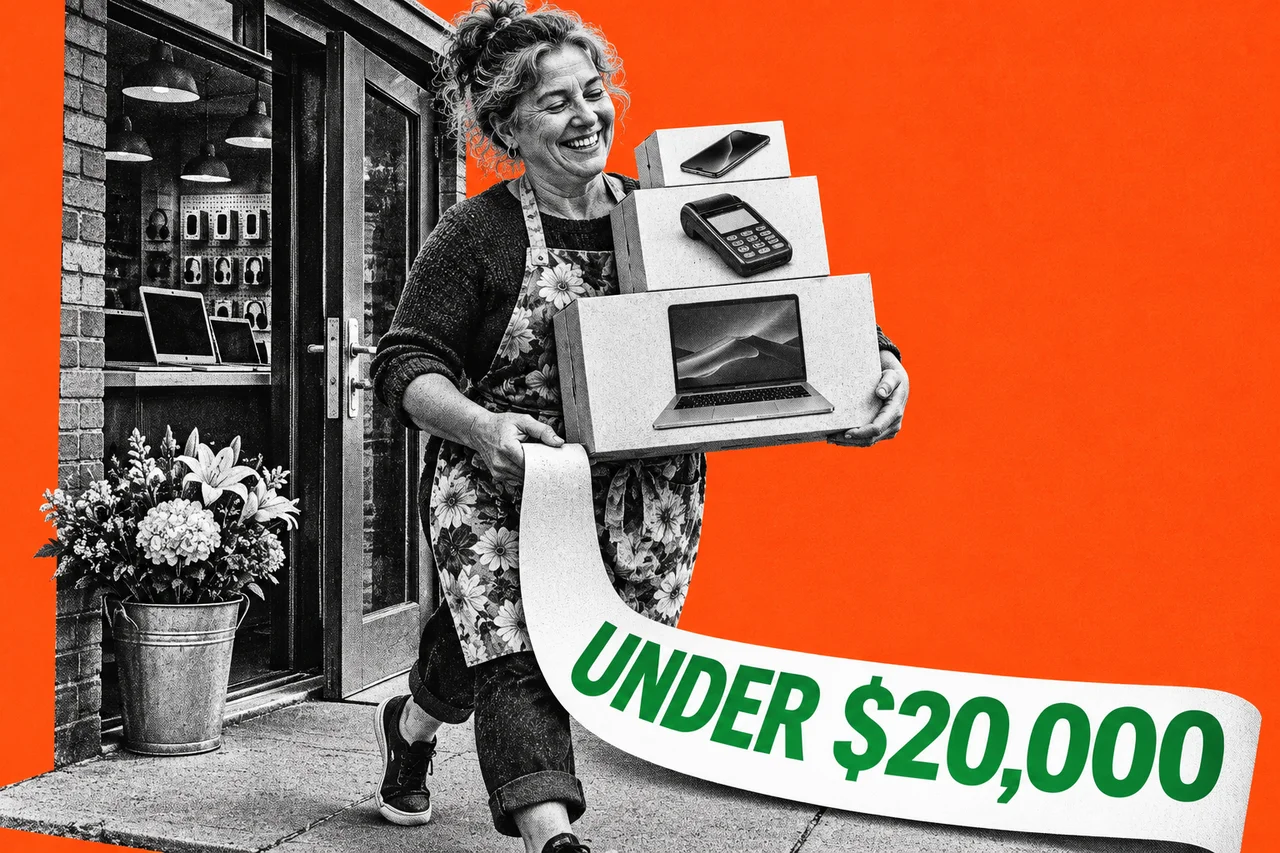
Buying a new laptop, phone or coffee machine for the business before 30 June? If it costs less than $20,000, you can probably claim the business share of it in one hit this financial year.
That’s the instant asset write-off. For years the $20,000 limit was extended one year at a time. The law for 2025–26 only passed in December 2025, five months into the year it covered. Not any more. Parliament has made the $20,000 limit an ongoing part of the tax law.
Here’s who can use it, what counts, and the sums that trip people up.
$20,000 is now law, with no end date
The 2026–27 Budget promised to “permanently extend the $20,000 instant asset write-off for small businesses”. The Treasury Laws Amendment (Tax Reform No. 2) Act 2026 did it. It received Royal Assent on 26 August 2026.
The Act replaces the old $1,000 figure in the main tax law with $20,000. It applies to assets you first use, or install ready for use, on or after 1 July 2026. Earlier increases were temporary rules that ran out each 30 June. This one has no end date, though a future Parliament could still change it.
The 2025–26 limit was also $20,000, so nothing changes for assets you started using last financial year.
Who can claim it
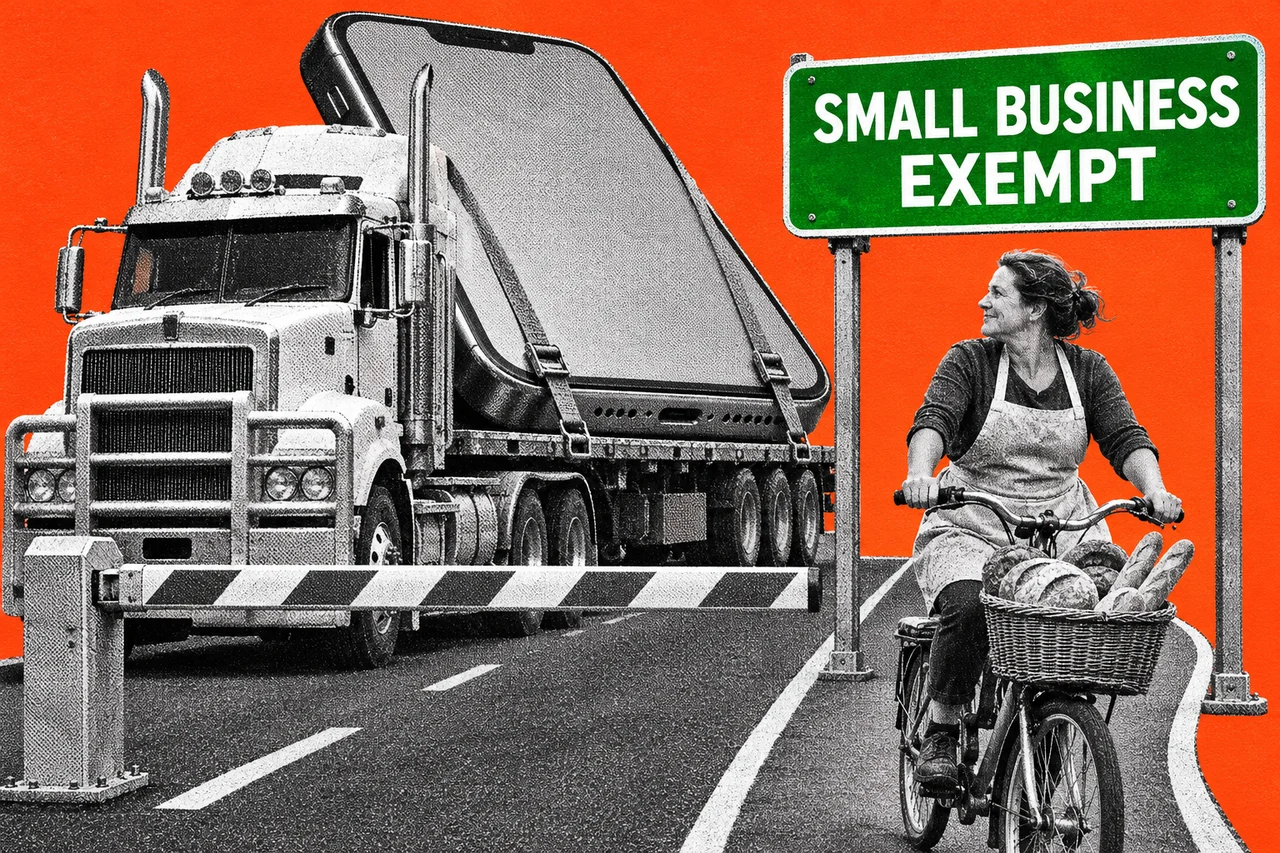
You need an aggregated turnover of less than $10 million. That’s your business’s turnover plus that of any affiliates and connected businesses.
You also have to use the ATO’s simplified depreciation rules. That’s an all-or-nothing choice: the ATO says you must “apply the entire set of rules, not just individual elements”. Your tax agent will know whether you already do.
For 2026–27, the asset has to be first used or installed ready for use between 1 July 2026 and 30 June 2027. Buying it in June and leaving it in the box until July pushes the claim into the next year.
The limit is per asset, not per year
The test applies to each item. A business can write off a $3,000 laptop, a $1,500 phone and a $900 payment terminal, because each costs less than $20,000.
Each one must cost less than $20,000. An asset costing exactly $20,000 or more doesn’t qualify for the instant write-off.
Second-hand assets count too. The cost includes delivery and installation, and if you trade something in, the ATO tests the full price before the trade-in credit.
GST and private use change the sums
GST. If you’re registered for GST and can claim the full GST credit, you work from the price without GST. If you’re not registered, the GST you paid is part of the cost.
Private use. The whole cost is tested against the limit, but you only claim the business share. The ATO’s own example is a sole trader with a $6,800 computer used 80% for the business. The deduction is $5,440. A $700 printer used only for work is claimed in full, so she claims $6,140 in total.
Be honest about the split. A phone that’s also your personal phone isn’t 100% business.
A deduction, not a refund
The write-off doesn’t send you $20,000, or any cash. It’s a tax deduction, so it lowers the income you pay tax on. What it’s worth depends on your tax rate, and you still have to pay for the asset.
It also isn’t a reason to buy something you don’t need. A $3,000 deduction doesn’t make a $3,000 laptop free.
Software: bought or subscribed?
Software you buy, or pay someone to build, for use in your business and not for sale is in-house software. Under the simplified rules, if it costs less than $20,000 and is installed ready to use, it can be written off too.
Subscriptions are different. The ATO says periodic payments to use software, such as a monthly accounting or design plan, are deductible in the year you incur them. That’s an ordinary expense, so the write-off doesn’t come into it. If you’re weighing up a new computer for the office, our guide to choosing Mac or Windows starts with the software you run.
Bigger purchases go into the pool
Assets costing $20,000 or more go into your small business pool. The pool gets a 15% deduction in the first year, whenever in the year you bought the asset, and 30% each year after that.
If the pool’s balance at the end of the year, before depreciation, is less than $20,000, you write off the whole balance. The Act raised that threshold to $20,000 as well.
If you left the simplified rules in the past, there’s usually a five-year lockout before you can return. That lockout is suspended until 30 June 2027.
New in business and not sure where you stand with tax yet? Our guide to when a new business needs an ABN and GST is a good first stop.
Checklist
- Check your turnover. Confirm your aggregated turnover, including affiliates and connected businesses, is under $10 million.
- Ask your tax agent about simplified depreciation. The instant asset write-off only works if you use the ATO’s simplified depreciation rules for all your depreciating assets, apart from a few exclusions.
- Price each asset on its own. Each item must cost less than $20,000, without GST if you’re registered for GST and can claim the full credit.
- Set it up by 30 June 2027. To claim in 2026–27, the asset must be first used or installed ready for use by 30 June 2027.
- Work out the business share. Note what percentage of each asset’s use is for work, and claim only that share.
- Keep the invoice and delivery details. Cost includes delivery and installation, so keep the paperwork that shows them.
- Claim subscriptions as expenses. Monthly or yearly software plans are deducted in the year you incur them, not through the write-off.
Tick items as you go. Your ticks stay in this browser.