Small businesses promised an exemption from the Digital Duty of Care
The Communications Minister says small businesses will be exempt from the online safety duty. The exemption would come later, through a rule rather than the bill.
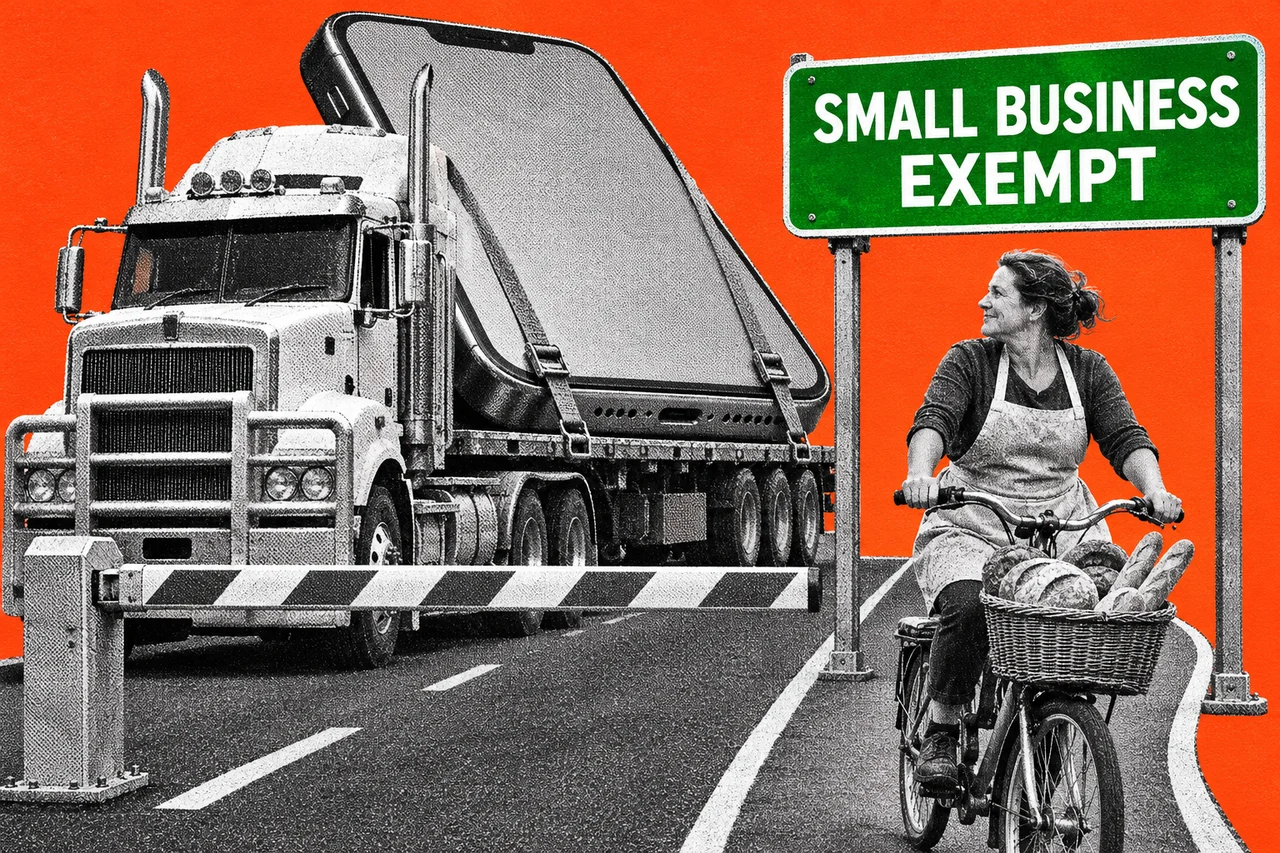
Worried the new online safety law would land on your café’s website? The government now says small businesses will be exempt from the Digital Duty of Care.
Communications Minister Anika Wells made the promise speaking to reporters at Parliament House on Monday 23 November. “We are pleased to make very clear this morning that small businesses will be exempt from obligations under Digital Duty of Care,” she said.
That goes to a gap in our first story on the bill: the September draft had no size threshold. But the exemption isn’t written into the bill.
A promise now, a rule later
The bill gives the government a power to exempt low-risk services, and that is how the carve-out would be made. “We, under the bill, drafted the ability for rulemaking powers to exempt low-risk services,” Wells said, adding that the government always intended to work with industries “about what that would look like”.
In the September draft, that power sat with the minister. The minister could exempt a service, or a whole class of services, by legislative instrument. The test was that it posed little risk to users in Australia, or was used minimally here. The eSafety Commissioner’s advice had to be sought first. An exemption could come with conditions, and could switch off just some duties, such as the yearly risk assessment.
So the detail that matters is still to come. The government hasn’t said yet how “small business” will be defined, or whether the exemption will carry conditions. Wells said she was “absolutely committed” to working with small business so the rule “works for them as it works for us”.
Business groups want it in the bill
Business groups aren’t satisfied with a rule. COSBOA, the Council of Small Business Organisations Australia, said in a statement that the exemption should be written into the legislation, “rather than left to future rules”. The Australian Retail Council asked Parliament to delay the bill and fix it with business.
The difference is real. Under the draft, a minister could make, change or narrow an exemption without a new Act. Changing a line in the Act needs Parliament.
SmartCompany reports that a Senate committee also recommended amendments confirming small business websites are low risk.
Still before the Senate
The bill passed the House of Representatives on 28 October, Startup Daily reported, and is now before the Senate. Wells said negotiations were continuing to pass it “this week”.
She also confirmed talks with the Greens on letting individuals sue. A Senate committee report on Friday 20 November recommended the government consider it. The Greens have also asked for penalties tied to revenue. If the bill passes as it stands, the maximum penalty would be $109.2 million, according to the department.
Until the bill passes and the rule is made, nothing changes for your business. The September draft had the duty starting 12 months after Royal Assent.
Checklist
- Work out what your business runs online. List your website, app, forum, booking system or customer chat, and note any place where customers can post or message each other.
- Watch for the low-risk exemption rule. The government plans to make it after the Digital Duty of Care bill passes. Check whether your business fits its definition of small business.
- Check any conditions in the exemption. Under the September draft, an exemption could switch off only some duties, such as the yearly risk assessment, or come with conditions.
- Have your say if consultation opens. The minister says she will work with small business on the exemption rule. When feedback is sought, explain what your website or app does and how the rule would affect it.
Tick items as you go. Your ticks stay in this browser.