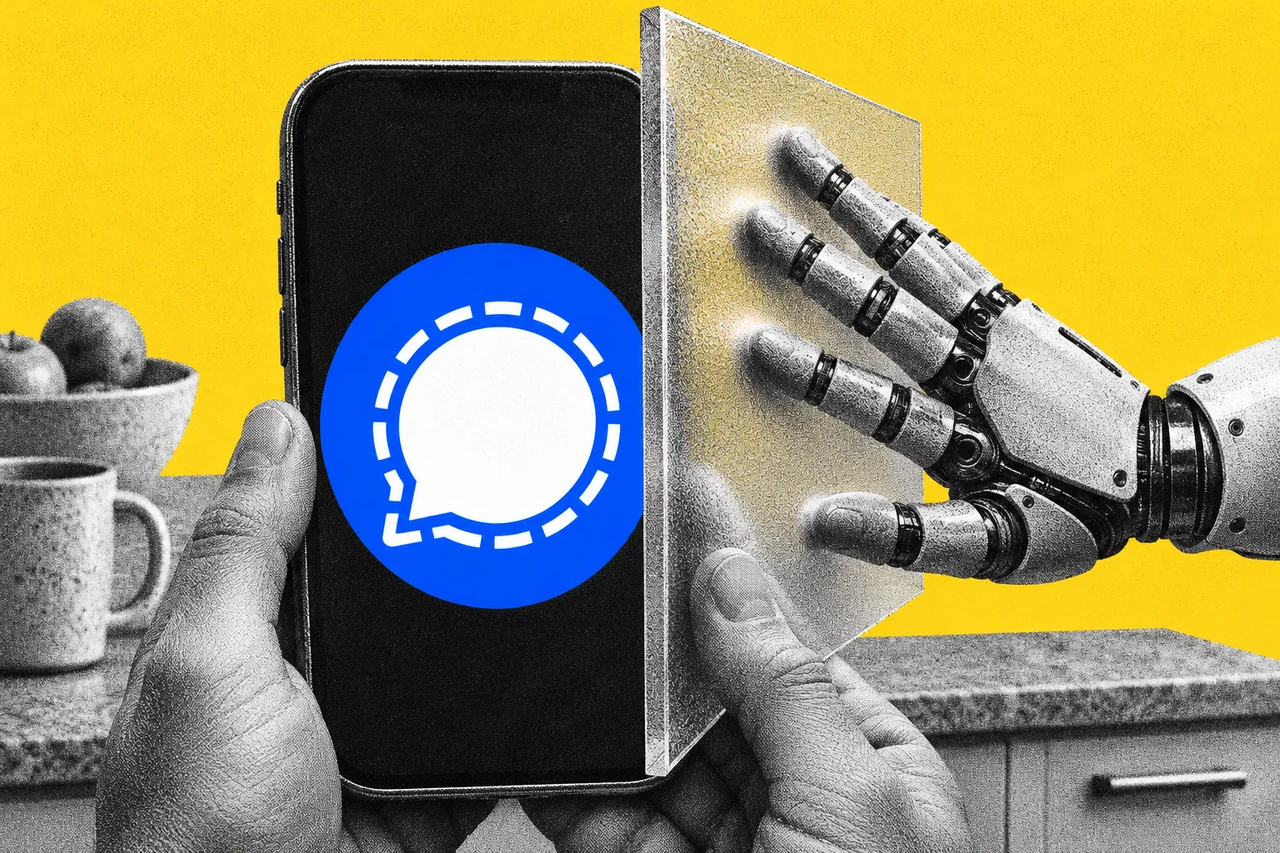
End-to-end encryption is a locked tin only the kitchen can open
End-to-end encryption means only the sender and recipient can read a message, not the app. Here’s what it covers, what it doesn’t, and where it stops.

“Your messages are end-to-end encrypted.” WhatsApp, Apple, Google and Signal all use the phrase.
It’s a real promise, and a strong one. But it covers one specific thing, and the gaps sit right next to it. Here’s what it means if the internet were a café.
A tin only the kitchen can open
Picture you’re the customer and your friend is the kitchen. You write your order, drop it in a small metal tin and snap a padlock on it. Only the kitchen has the key.
The waiter carries the tin across the café. So does anyone else who handles it along the way. None of them can open it. They can see that a tin is moving, but not what’s inside.
That’s end-to-end encryption. The message is locked on your phone and only unlocked on the other person’s. The app in the middle is the waiter.
WhatsApp puts it plainly: in an end-to-end encrypted chat, no one outside the chat, “not even WhatsApp”, can read, listen to or share your messages. Signal says it cannot decrypt or otherwise access the content of your messages or calls.
Most dockets aren’t in a tin
Here’s the catch. Plenty of what you send is carried like an open docket, or at best an envelope that gets opened at each station.
Ordinary texts are open dockets. Apple’s own support page says SMS and MMS messages aren’t end-to-end encrypted. Google’s Messages help says the same.
iMessage and Google Messages chats get the tin. Apple says iMessage conversations can’t be read while they travel between devices. Google says RCS chats between Google Messages users are automatically upgraded to end-to-end encryption, and shows a lock on the send button when they are.
iPhone-to-Android chats are halfway there. Apple began rolling out encrypted RCS between iPhones and Android phones in beta in May 2026. It needs every person’s phone company to support it. Telstra began switching on RCS in November, but Apple is still rolling out encrypted RCS over time, only on supported carriers.
Email is an envelope, not a tin. Gmail says all its messages use TLS automatically, which protects them on the way if the receiving service uses it too. Microsoft is blunt about what that means: TLS doesn’t encrypt the message, just the connection. The message itself isn’t locked, so if it’s passed to a service that doesn’t use TLS, it may travel unencrypted.
The tin doesn’t hide the delivery log
The lock keeps the order secret. It doesn’t hide the fact that a tin went from your table to the kitchen at 8.14 am.
That record of who talked to whom, and when, is called metadata. Encryption locks the contents, not the record of the trip. Signal’s privacy policy says your message history stays on your own devices, though you need a phone number to register.
The photocopy in the storeroom
A big gap is often the backup. A backup is a photocopy of every order you’ve ever sent, kept in a storeroom you don’t control.
On WhatsApp, iCloud and Google Drive backups get end-to-end encryption only if you turn it on. When you do, the backup is protected by a passkey, a password or a 64-digit key.
Apple’s iCloud is similar. Some data is end-to-end encrypted by default, including your passwords and keychain and Health data. Messages in iCloud is too, but only when iCloud Backup is off, because the backup keeps a copy of its key. Your photos, iCloud Drive files, notes and the backup itself only get end-to-end encryption with Advanced Data Protection switched on.
Apple stopped offering Advanced Data Protection to new users in the United Kingdom in 2025. It says it remains available everywhere else, which includes Australia.
There’s a trade-off. With Advanced Data Protection on, Apple doesn’t hold the keys, so it can’t help you recover your data. You’ll be asked to set up a recovery contact or a recovery key before you turn it on.
Once the kitchen has it, it’s the kitchen’s order
End-to-end encryption protects the trip. What happens after the tin is opened is up to the person who opened it.
That matters when you message a business. WhatsApp says that once a business receives your message, it’s subject to that business’s own privacy practices. Chats with a business that uses Meta’s optional services to manage its messages, or chats with a third-party agent, aren’t considered end-to-end encrypted.
And the obvious one: anyone holding your unlocked phone is standing in the kitchen. The lock was only ever for the journey.
What it’s good for
None of this makes end-to-end encryption less useful. For private conversations, it’s strong protection built into apps you already use, at no extra cost.
It means a breach at the app company, or someone snooping on the network, doesn’t expose what you said. Signal recently chose to block screenshots to keep Siri AI out of chats. It shows how far some apps go to keep content on the two devices in the conversation.
For a small business, it’s the right tool for things like a quick question about a customer’s job. Contracts, invoices and bank details need more thought. A message is only as private as the backup and the phone it lands on.
Checklist
- Turn on end-to-end encrypted backup in WhatsApp. It’s an option you have to switch on for iCloud and Google Drive backups. Store the password or 64-digit key somewhere safe, such as a password manager.
- Decide whether to turn on Advanced Data Protection for iCloud. It adds end-to-end encryption to your iCloud backup, photos, iCloud Drive and notes. Set up a recovery contact or recovery key first, because Apple can’t recover your data for you.
- Move private chats off plain SMS. Use iMessage, WhatsApp, Signal, or Google Messages where you see the lock on the send button.
- Don’t treat a normal email as a locked tin. By default, Gmail and Microsoft 365 protect the connection, not the message, so send bank details or ID documents through an end-to-end encrypted app with encrypted backup on.
- Check before sending sensitive details to a business on WhatsApp. Once it arrives, the business’s own privacy practices apply, and some business chats aren’t end-to-end encrypted.
Tick items as you go. Your ticks stay in this browser.