Better AI results start with a better brief
When an AI draft misses the mark, the brief is often the problem. A five-part structure (purpose, context, output, boundaries, review) and a free template.
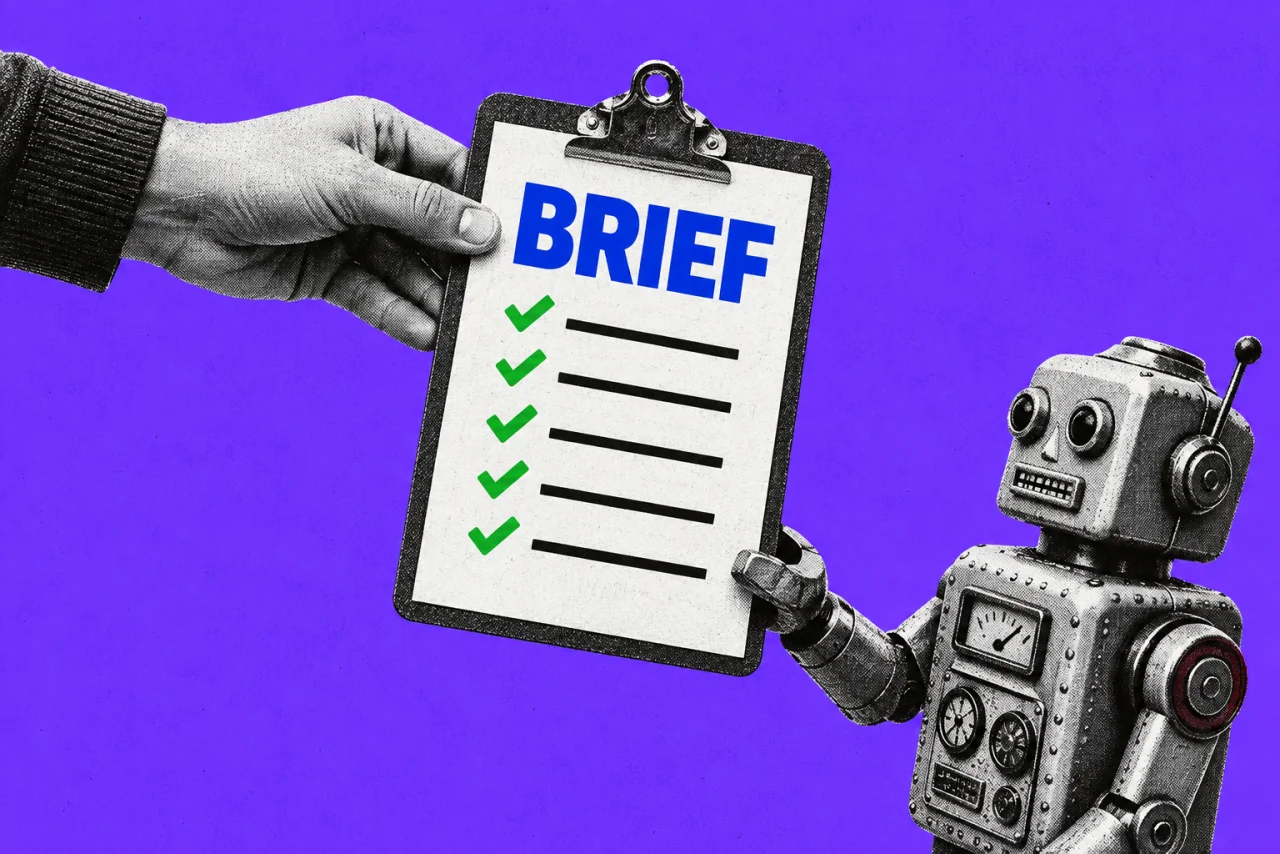
When an AI answer misses the mark, the instinct is to pile on more instructions. Often the better move is to check whether the job itself was clear. A good brief should let a human colleague understand what a good result looks like, too. Five parts cover it.
Purpose
State the decision or task the output supports. “Help me prepare questions for a website planning call” is more useful than “Give me website advice”.
Context
Supply the relevant facts and label your assumptions. Include the audience, the current situation and any material constraints. Leave out anything that doesn’t help with the task, especially confidential details that haven’t been approved for the tool.
Output
Describe a usable format. “Five questions, each with one sentence explaining why it matters” is easier to review than an unspecified report. If you need a table, name the columns and say how missing information should be shown.
Boundaries
Say what must be kept and what must not be invented. Ask for unsupported claims, unknown dates and missing source material to be flagged. Don’t rely on that instruction alone: the reviewer still needs to check the result.
Review
Decide who checks the output and what they will compare it with. Check important facts against the original source. For creative work, judge whether the result suits the audience and the business, not just whether it sounds polished.
A brief you can copy
Download the editable AI brief template to keep a working copy.
Help me prepare [output] for [purpose]. The audience is [audience]. Use these facts: [approved context]. Keep [constraints]. If information is missing, list what is needed rather than making it up. Format the result as [format]. I will review it against [source or criteria].
Try the brief on a small task, then revise whichever part caused the misunderstanding. Keep examples of useful outputs so the team has something concrete to aim for. To pick a suitable first experiment, read Start small with AI: choose a task you can check.